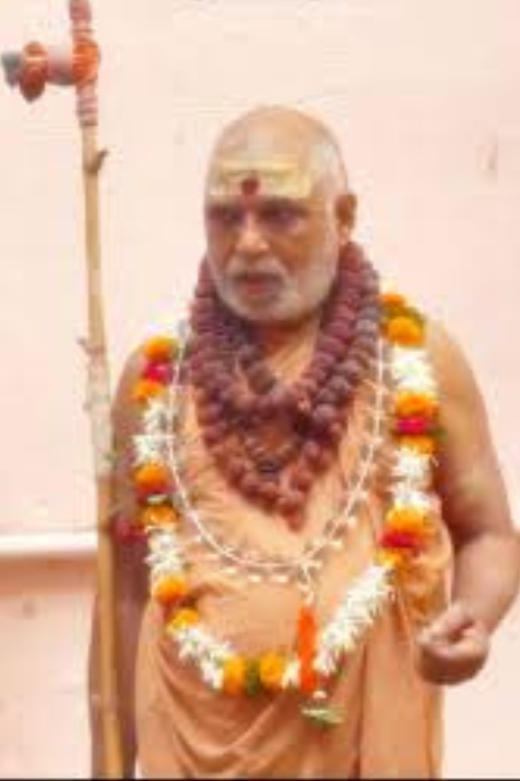
Śrī Amṛtānanda Sarasvatī Svāmigal
Kāmakoṭi Nilaya, Vārāṇasī
Salutations to Nārāyaṇa. Salutations to the revered Gurus. Salutations to Śiva, the Guru.
kañcitkālam umāmaheśa bhavataḥ pādāravindārcanaiḥ
kañcid dhyānasamādhibhiśca natibhiḥ kañcitkathākarṇanaiḥ |
kañcit kiñcidavekṣaṇaiśca nutibhiḥ kañciddaśāmīdṛśīm
yaḥ prāpnoti mudā tvadarpitamanaḥ jīvan sa muktaḥ khalu ||
śrīgurubhyo namaḥ | śivāya gurave namaḥ |
śrī sāmbasadāśiva parabrahmaṇe namaḥ |
O Umā-Maheśvara, by worshipping Your lotus feet; even for a few moments—by meditation and samādhi; by prostrations; by listening to sacred narratives; by seeing and by offering praises—one who has surrendered his mind to You is indeed liberated.
In this world, Lord Śiva—Maheśvara, Viśvanātha, the remover of the suffering of those who bow to Him, and easily pleased—is worthy of worship by all people at all times. He alone bestows grace upon all, without any consideration of whether they are worthy or unworthy.
He becomes supremely pleased even by mere meditation. Such a Lord, who is so easily satisfied, is not seen elsewhere. Therefore, He is worthy of worship by all.
"punarapi jananaṃ punarapi maraṇaṃ punarapi jananījaṭhare śayanam"
In this world, all beings suffer repeatedly: again birth, again death, again lying in the womb of the mother. Thus do they continue endlessly. How is the suffering of birth and death to be overcome? It is declared that by mere engagement in worldly existence, not even the slightest trace of happiness is obtained—there is no doubt in this.
jananamṛtiyutānāṃ sevayā devatānāṃ,
na bhavati sukhaleśaḥ saṃśayo nāsti tatra |
ajanimṛtarūpaṃ sāmbamīśaṃ bhajante,
ya iha parama saukhyaṃ te hi dhanyā labhante ||
Those who worship Sāmbāśiva, who is unborn and of immortal nature, attain supreme happiness here itself; they indeed are blessed. Therefore, such persons alone are truly blessed who attain this blessedness. Hence, the Lord is to be worshipped at all times. What indeed is the nature of that Lord Śiva?
no te gotraṃ nāpi janmāpi nākhyā,
no vā rūpaṃ naiva śīlaṃ na deśaḥ |
itthambhūto’pīśvarastvaṃ trilokyāḥ,
sarvān kāmān pūrayeḥ tad bhaje tvām ||
You have no lineage, no birth, no name, no form, no qualities, and no limitation of place. Even being of such a nature, O Lord, You fulfill all the desires of the three worlds—therefore I worship You. Such is His nature—He is the fulfiller of all desires and is indeed of the nature of the Parabrahman. Therefore, He alone is always to be bowed to; by all, at all times, He alone is to be contemplated; He alone is eternal.
tvattaḥ sarvaḥ tvaṃ hi sarvaṃ smarāre,
tvaṃ gaurīśaḥ tvaṃ ca nagno’si śāntaḥ |
tvaṃ vai vṛddhastvaṃ yuvā tvaṃ ca bālaḥ,
tat kiṃ yattannāsti atastvānnato’asmi ||
From You arises everything; You indeed are everything, O destroyer of Kāma. You are the Lord of Gaurī; You are also beyond attributes, serene. You are old, You are young, You are also a child—what is there that You are not? Therefore, I bow to You. What are You not? You alone are everything. You alone are always worthy of worship by all.
upāsakānāṃ yadupāsanīyam
upāttavāsaṃ vaṭaśākhimūle |
taddhāma dākṣiṇya diṣāstvamūrtyā
jāgartu citte bahubodharūpam ||
Thus, by all devotees, He alone is to be worshipped. That which is worthy of worship for devotees—abiding beneath the banyan tree, assuming a form that radiates knowledge in all directions—may that Supreme Abode, in the form of Dakṣiṇāmūrti, awaken in the heart as the embodiment of supreme knowledge.
He, in the form of Dakṣiṇāmūrti, destroys the ignorance of all; therefore He alone is always to be remembered by all. As Bhagavatpāda Ācārya says:
prātarbhajāmi manaso vacaso'nugamyam
vāco vibhānti nikhilā yadanugraheṇa |
yannetinetivacanairnigamā avocan taṃ
devadevamajamacyutamāhuragryam ||
“I worship in the morning that Supreme, who is beyond the reach of mind and speech, by whose grace all words shine, whom the Vedas describe as ‘neti neti (not this, not this),’ that God of gods, unborn, imperishable, supreme.”
In such verses, this truth alone is repeatedly declared. Therefore, such a Lord is to be remembered by all at all times; He alone is to be contemplated.
Likewise, in other hymns and compositions, His nature is described in great detail.
“śrīśailādikṛtaniṣevaṇa kailāsaśikharabhūṣaṇa tatvārthagocara candrārdhaśekhara pāśāyudha kulādryatismitāpāṅga kopāruṇakaṭākṣabhasmitānaṅga sasmitāpāṅga ūrīkṛtavibhūtidivyāṅga rāgagaurīkṛtaparigṛhīta savyāṅgabhāvāṅgāruṣaṅga pāvitā narāsthideśagaṅgātaraṅga bhāsita jaṭāpradeśa vandanābhirata ākhaṇḍalasyandanāyita bhūmaṇḍala āśritapadadāsā tāpasakadamba cakrīkṛtārka śītakara bimba”
By such phrases, He alone is described—the Lord who is worshipped in sacred kṣetras such as Śrīśaila, who is the ornament of Mount Kailāsa’s summit, who is accessible through realization of the true nature of Reality, who bears the crescent moon upon His crest, whose weapon is the pāśa, whose wrath-red glance reduced Kāma to ashes, whose smiling sidelong glance is gracious, whose sacred ash is His divine bodily adornment, who has Gaurī as His left half, whose matted locks shine with the waves of the Gaṅgā, who is attended by multitudes of ascetics and surrendered devotees, and around whom even the solar and lunar orbs seem to revolve.
Therefore, since the worship of Lord Śiva is to be performed by all at all times, the noble scholars of Bhāskara Prakāśa Āśramam, belonging to an illustrious paramparā, have prepared this excellent work titled “Sadyojāta Vidhāna Śiva Pūjā.” In this text, everything pertaining to worship is present.
This grantha begins with Guru-stuti.
Then the pūrvāṅga-pūjā (preliminary rituals) are described in detail.
From saṅkalpa onward, kalaśa-pūjā, śakti-ṣaḍaṅga-nyāsa, Śrīkaṇṭhādi-mātṛkā-nyāsa, Śiva-pañcākṣarī-mantra, and more are included.
An authentic version of the Mahānyāsa is available therein. All authoritative recitations are available here.
Śaiva-pīṭha-pūjā is present; āvāhana and related procedures are included.
The Sadyojāta-vidhāna ṣoḍaśopacāra-pūjā shines there brightly.
Abhiṣeka-mantras are beautifully presented.
A collection of many mantras is included. Śivopāsanā-mantras are present.
Śivāṣṭottara, Śivātharvaśīrṣa, Nandikeśvara-pūjā, bali-pradāna, and more are included.
Thus, this is a highly authoritative text, to be studied and practiced by all at all times. Therefore, this book is indeed to be preserved and adopted by all. We reflect that the entire world may benefit through this text.
Looking at the great effort of the members of Bhāskara Prakāśa Āśramam, my mind is extremely pleased. There exists a great lineage of learned ascetics there—Vimarśānandanātha, Prakāśānandanātha, Rāmānandanātha, and others. Reflecting upon this lineage, our hearts rejoice again and again.
May their effort become fruitful. May this Āśrama continue to produce many such works and publish them for the welfare of the world. Thus do I earnestly pray to the Divine, Umāpati.
vāmārdhavidyutpratimaprabhāya,
vācāmanaḥkarmavimocanāya |
vāgīśvarīsūkṣmavarāya nityaṃ,
tasmai vakārāya namaḥ śivāya ||
Salutations to that Śiva whose left half shines with the brilliance of lightning, who grants liberation to speech, mind, and action, who is the subtle and supreme essence of Vāgīśvarī. To that eternal principle, embodied in the sacred syllable “va”, I offer my salutations—namaḥ śivāya.
Nārāyaṇa, Nārāyaṇa, Nārāyaṇa.
Śrī Amṛtānanda Sarasvatī Svāmigal
Kāmakoṭi Nilaya, Vārāṇasī